Tourist Information

Things to see when visiting our Guest House in Aberdeen.

Aberdeen, often referred to as “The Flower of Scotland” due to its many parks and gardens, lies in a picturesque spot on the North Sea between the Rivers Dee and Don. The capital of the Grampian Region, Aberdeen is Scotland’s biggest fishing port, an important centre for offshore oil, and the ferry terminus for the Orkney and Shetland Islands.

Tourists can enjoy its two miles of sandy beaches, superb golf courses, shop-lined streets, theatrical and dance performances at His Majesty’s Theatre, concerts by top-class orchestras in the Music Hall, and a variety of arts festivals during the summer months. Regardless of when you visit, there are always plenty of things to do in Aberdeen by day or night.

Silver-Gray granite from nearby quarries gives the city a distinctive character, when the sun shines, the mica in the stone sparkles. This interesting architectural effect led to Aberdeen’s other nickname: “Silver City.” Aberdeen has many interesting places to visit, including several protected historical buildings, the oldest of which dates from the 16th century.

Union Square Shopping Centre

Union Square brings stylish shopping to the heart of the city with fabulous fashion and lifestyle stores to explore including Apple, Marks & Spencer, Joules, BOSS, Zara, Hollister and MAC.

Hungry from shopping? There’s plenty of choice at Union Square with a fabulous selection of vibrant cafés, restaurants and places to grab a snack. And if you love film, you will love Aberdeen’s largest cinema – our 10-screen Cineworld, on the upper mall.

Restaurants are open until 11pm, and Cineworld cinema event later. Stores opening hours may vary.

3 3

Gordon Highlanders Museum

The North East of Scotland. For two hundred years this spectacular landscape gave us the men who made one of the finest regiments the British Army has ever seen – The Gordon Highlanders.

Situated in the fashionable west end of Aberdeen, Scotland, in the former home of leading Scottish artist Sir George Reid, The Gordon Highlanders Museum and Duchess Jean Tea Room offer a warm, friendly welcome to all our visitors and is a great day out.

The only Visit Scotland 5-Star Attraction in Aberdeen, the Museum tells the extraordinary 200 year story of “the Finest Regiment in the World!”*

11 2

Aberdeen Art Gallery

From Brueghel to Borland, Landseer to Lambie and from Guthrie to Gibb, Aberdeen Art Gallery’s collection spans over 700 years and includes a staggering range of works by artists, designers,and makers. For over 130 years we have been acquiring the best and most interesting contemporary artworks. Today this Recognised Collection of National Significance is regarded as one of the UK’s finest. We are proud to care for these treasures on behalf of the people of Aberdeen and to share their stories with all our

The Tolbooth Museum

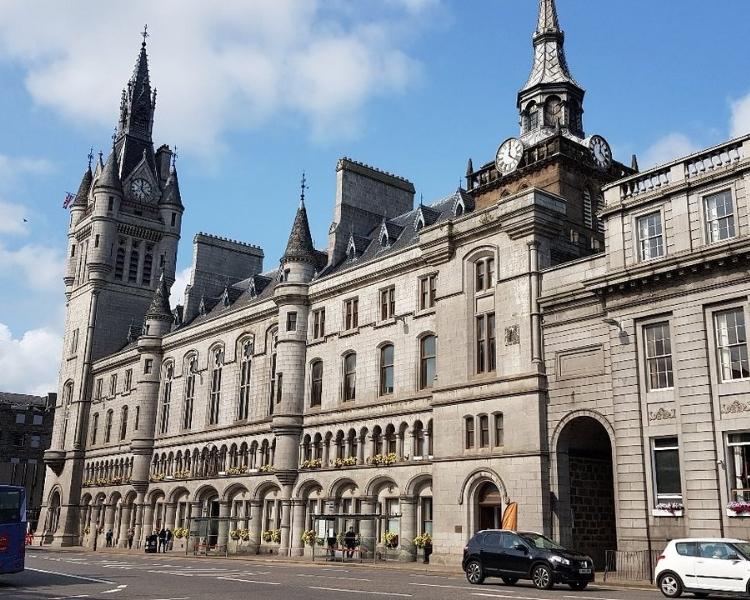
The Tolbooth Museum is housed in the former ward house, or prison for Aberdeen, a unique complex of 17th and 18th century gaol cells. It first opened to the public as a museum in 1995.

The Tolbooth Museum is extremely popular with locals and tourists alike. Featured displays deal with local history and the evolution of crime and punishment over the centuries. The museum’s unique atmosphere and gaol cells provide a striking visitor experience and a real insight into imprisonment and the treatment of prisoners and rebel Jacobite’s in times gone by.

9 2

Brig o’ Balgownie

Local legend suggests that this bridge was started by Bishop Henry Cheyne in the late 13th or early 14th century and completed by Robert the Bruce. Whilst this may or may not be true, historical documents show that the bridge we see today was the result of rebuilding work in three phases in the early 17th century.

This was the main crossing on the Don leading to the north from Aberdeen and vice versa prior to the construction of the adjacent Bridge of Don in 1831. Today the Brig o’ Balgownie is a Scheduled Ancient Monument.

Aberdeen Maritime Museum

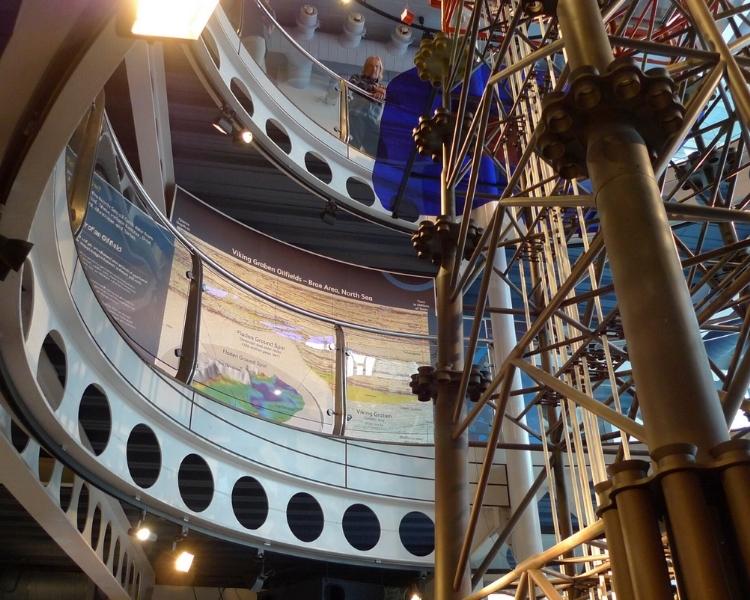
Telling the fascinating story of the North Sea through fantastic new exhibitions, interactive displays and multi-media presentations, Aberdeen Maritime Museum is acknowledged as one of the finest visitor attractions in Scotland.

Following a multi-million-pound expansion and refurbishment in 1997, the museum has five times the exhibition space of the original museum which was based in the 16th century Provost Ross’s House.

Aberdeen’s excellent collections of maritime paintings and objects are utilized to the full in the new museum, with touch screen consoles, computer visual databases, education room and hands-on exhibits all adding a new dimension for visitors and bringing the drama of the North Sea industries such as offshore oil, fishing and shipping, to life.

5 2

Market Cross

The market cross of Aberdeen, the finest and best preserved of all the seventeenth century market crosses of Scotland, occupies a site in the Castlegate of the city on which a market cross has stood since, at least, the days of Robert the Bruce. Like other towns, Elgin, for example, at the present day, Aberdeen once had two crosses. One was the ‘fish cross’ in the east end of the Castlegate, round which the fisher folk displayed their wares until the removal of the fish cross in 1742. The other, situated at the western end of the spacious market place, was known as the ‘flesh cross’ from the circumstance that the booths of fleshers stood near it for many years in times when flesh meat was allowed to be sold on only certain days of the week.

12 2

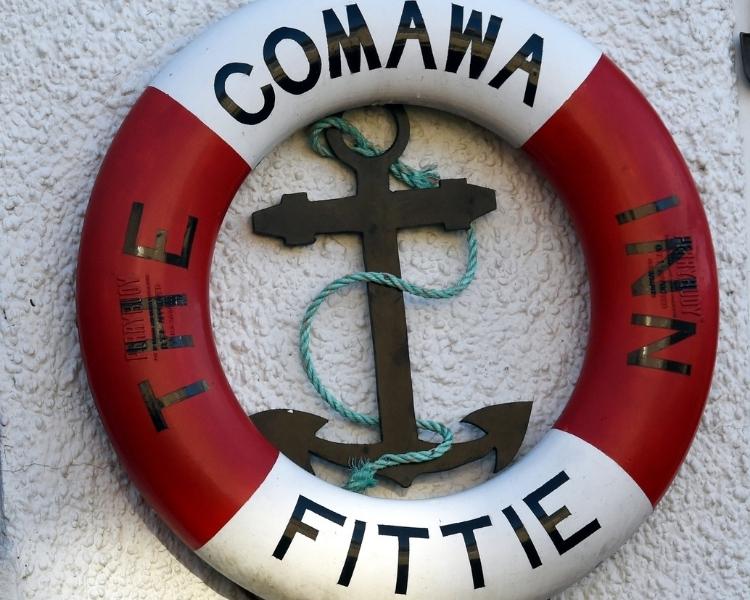
Footdee (pronounced “Fittie”)

Footdee (pronounced “Fittie”) is a small fishing village near Aberdeen harbour. From the beach it’s easy to miss but turn a corner and you’re in a delightful square full of dinky little houses gathered round a communal green. Round the outside of the square the buildings are regular – neat rows of granite cottages and townhouses.

1 3

St Machar’s Cathedral

St Machar was a companion of St Columba, and established a church in Old Aberdeen around 580 AD. According to a 14th century account, God (or St Columba) told Machar to establish his church whee a river bends in the shape of a bishop’s crozier before entering the see. The River Don makes this shape near the present cathedral site. Was the story made up after the fact, suggested by the river’s shape?

St Machar’s church was rebuilt in 1131 in Norman style. Shortly after the rebuilding, King David I transferred the see of Mortlach to Aberdeen, making the church a cathedral.

Very little remains from the 12th century cathedral church beyond a carved capital fragment. In the late 13th century Bishop Henry Cheyne began to enlarge the church in the form of a fortified kirk, with towers more reminiscent of fortified tower houses than church towers. Bishop Cheyne’s work was interrupted by the upheaval of the Scottish Wars of Independence.

Dunotter Castle

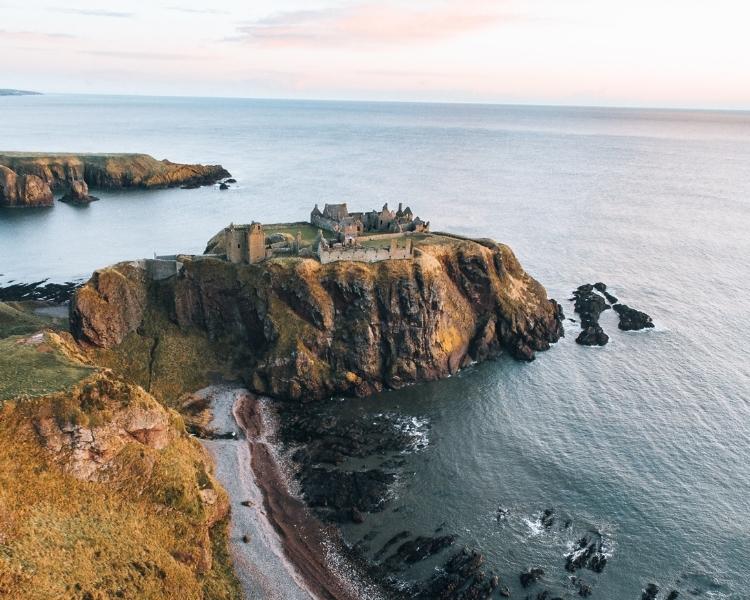
his dramatic and evocative ruined cliff top fortress was the home of the Earls Marischal, once one of the most powerful families in Scotland.

Steeped in history, this romantic and haunting ruin is a photographer’s paradise, a history lover’s dream and an iconic tourist destination for visitors the world over.

Visit Dunnottar Castle for your own unforgettable experience and discover the importance of Dunnottar – an impregnable fortress that holds many rich secrets of Scotland’s colourful past.